



GFF Partner Country Mozambique
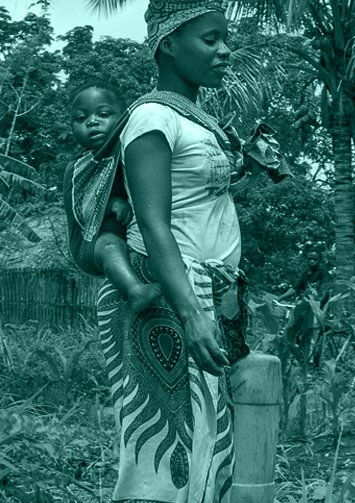
Mozambique’s government prioritizes actions to expand access to quality health and nutrition services — including sexual and reproductive health (SRH) — in districts with the worst health outcomes.
The GFF supports programs to make contraceptives and SRH education available to adolescent girls and boys in secondary schools. In addition, the GFF is supporting the development of a new SRH package for secondary and technical schools. Other priorities include increasing health spending and implementing reforms to improve service quality through quality-of-care scorecards and performance-based funding to frontline health facilities and district hospitals.
Strong focus is also placed on scaling up the community health worker program and strengthening primary health care, while outsourcing last-mile distribution of drugs to the private sector.
Impact Indicators
This section presents core impact indicators for RMNCAH-N and health financing. These indicators track health outcomes and financing performance, aligned with global targets to support evidence-based planning and resource allocation.
Core RMNCAH-N Impact Indicators
The 8 GFF core impact indicators reflect updates aligned with the in-country survey schedule which optimally occurs once every three to five years to determine population-based changes in important health and nutrition outcomes. These indicators are core to the GFF Logic Model, to reflect impact of aligned interventions over time.
The GFF highlights progress between the two most recent point estimates from population-based surveys approved by countries. The timing of the data points is dependent on when survey data are available, which introduces lags. In addition, it has been demonstrated that stillbirths tend to be under-reported in population based surveys1.
For many of the indicators highlighted in this table, annual estimates are produced through global processes. The globally produced estimates can be found through the following sites:
Core Health Financing Indicators
The six GFF core health financing indicators track changes to country budget and expenditures with a focus on health spending, to monitor the expected impact of increasing the total volume and value of funding allocated to health and nutrition. The GFF partnership supports financing reforms by engaging with ministries of finance and ministries of health to strengthen mobilization of domestic resources as well as allocative and technical efficiency. These indicators are tracked through country-specific data sources such as BOOST, NHA, and budget reports. Expenditure data are tracked through the Global Health Expenditure Database (GHED), for which data are available through the end of 2018. Through measurement of budgets and expenditures, the GFF partnership aims to accelerate the expansion of interventions that are high-impact, cost-effective, affordable, and feasible to accelerate progress on universal health coverage and in achieving SDG targets.
Survey and Estimated RMNCAH-N Coverage
The Burkina Faso team collaborated with Countdown to 2030 and GFF in an analysis workshop in Nairobi Kenya, in June April, 2025. As a result of that workshop the team estimated coverage of key service delivery indicators for participating countries that can be found in this link.
The RMNCAH-N coverage data includes a standard set of 15 RMNCAH-N coverage indicators from available population-based surveys from 2010 to the most recent available survey. These indicators show progress towards key goals across maternal, child, and adolescent health and nutrition outcomes. Additional key nutrition-sensitive and/or education-specific coverage indicators are presented for countries where the GFF co-finances a nutrition-focused World Bank project or where education is a strong focus of the IC.
The RMNCAH-N coverage data are sourced from the most recent available population-based surveys.
Resource Mapping
Resource mapping is a key component of the GFF approach. The resource mapping exercise helps countries assess funding gaps, align donor and government resources, and improve the efficiency and equity of health spending. Resource mapping data for each country varies based on whether countries have completed one or more resource mapping exercises.
Data and Analytics Partnerships
The GFF works in close collaboration with governments and technical partners to strengthen national data systems and promote the use of evidence for decision-making. Through initiatives such as FASTR, AdLAB, Countdown and MAGE, countries are supported to generate, analyze, and apply data to improve planning, equity, and accountability for women, children, and adolescents’ health. Learn more about these partnerships and how they support country-led and results-driven efforts.
AdLAB (Adolescent Learning, Action and Benchmarking) strengthens national capacity to analyze and use data for adolescent and youth health. It promotes the use of evidence for scalable solutions and engages stakeholders to ensure health systems are responsice to adolescents' needs.
Countdown works with countries to analyze health trends and equity gaps. It supports subnational tracking and data use to improve planning and resource allocation for RMNCAH-N priorities through technical collaboration and capacity strengthening.